When it comes to maintaining your home’s plumbing system in Dayton, Ohio, few practices are as crucial yet overlooked as regular drain cleaning. As a locally-owned plumbing company that has served the Greater Dayton area for over 67 years, Atherton Plumbing has witnessed firsthand how proactive drain maintenance can save homeowners thousands of dollars in emergency repairs while ensuring their plumbing systems operate at peak performance.
Dayton’s unique water characteristics, combined with the region’s aging infrastructure and seasonal weather patterns, create specific challenges that make regular drain cleaning not just beneficial, but essential for every property owner in our community. Understanding these local factors and implementing a strategic maintenance approach can mean the difference between smooth-flowing drains and costly plumbing disasters.
Understanding Dayton’s Water Quality Challenges
The foundation of effective drain maintenance begins with understanding what flows through your pipes daily. Dayton’s municipal water supply presents unique characteristics that directly impact your plumbing system’s health and longevity. The city sources its water from local wells, which naturally contain high concentrations of minerals that contribute to what we commonly call “hard water.”
According to the City of Dayton’s official water quality reports, our local water averages 155 milligrams per liter of hardness, equivalent to approximately 9 grains per gallon. While the city’s treatment facilities work to soften this extremely hard well water, the final product delivered to your home still maintains a moderately hard classification. This level of mineral content, while safe for consumption, creates ongoing challenges for your plumbing system that many homeowners don’t fully appreciate.
The primary culprits in Dayton’s water are calcium and magnesium, naturally occurring minerals that become problematic when water evaporates or is heated. These minerals don’t simply disappear down your drains; instead, they gradually accumulate on pipe walls, creating an increasingly thick layer of scale that narrows your pipes’ interior diameter. Over months and years, this mineral buildup transforms from a minor inconvenience into a significant obstruction that can completely block water flow.
What makes Dayton’s situation particularly challenging is the cumulative effect of daily mineral exposure. Every time you wash dishes, take a shower, or run your washing machine, you’re introducing more calcium and magnesium into your drain system. The heated water from these activities accelerates the mineral precipitation process, causing faster buildup in frequently used drains like kitchen sinks and bathroom fixtures.
Additionally, Dayton residents occasionally experience what the city terms “rusty water” – reddish or brownish discoloration caused by iron deposits dislodged from the distribution system. While this typically occurs during periods of increased water flow and isn’t considered a health threat, it indicates the presence of iron minerals that can also contribute to drain buildup and staining.
The Science Behind Drain Buildup in Hard Water Areas
Understanding how mineral accumulation occurs in your drains helps explain why regular cleaning becomes so critical in areas like Dayton. When hard water flows through your pipes, it carries dissolved calcium, magnesium, and iron in solution. Under normal flow conditions, these minerals remain suspended and move through your system without issue. However, several factors can cause these minerals to precipitate out of solution and adhere to your pipe walls.
Temperature changes represent the most significant factor in mineral precipitation. When hot water cools as it travels through your pipes, or when heated water encounters cooler pipe surfaces, the minerals’ solubility decreases dramatically. This is why you’ll notice white, crusty deposits around your faucets, showerheads, and in your coffee pot – areas where heated water regularly evaporates or cools rapidly.
The process becomes self-perpetuating as initial mineral deposits create rough surfaces that provide additional nucleation sites for further accumulation. What begins as a microscopic layer of scale gradually builds into substantial deposits that can reduce pipe diameter by several millimeters or more. In severe cases, these deposits can completely obstruct smaller drain lines, particularly in areas with minimal water flow.
Beyond mineral deposits, Dayton’s hard water also affects how soaps and detergents perform in your home. The calcium and magnesium ions interfere with soap’s cleaning action, causing it to form insoluble precipitates rather than dissolving completely. These soap curds combine with the mineral deposits to create a particularly stubborn form of buildup that’s resistant to simple flushing or basic cleaning attempts.
The interaction between hard water minerals and organic waste creates additional complications. Food particles, grease, hair, and other organic matter that enters your drains can become cemented in place by mineral deposits, creating composite blockages that are far more difficult to remove than either component would be individually. This is why homes in hard water areas like Dayton often experience more frequent and severe drain clogs than those in soft water regions.
Professional vs. DIY Drain Cleaning: What Dayton Homeowners Need to Know
The abundance of DIY drain cleaning products and home remedies available today can make professional drain cleaning seem unnecessary or overly expensive. However, understanding the limitations of DIY approaches, particularly in hard water environments like Dayton, reveals why professional intervention becomes essential for long-term plumbing health.
Most commercial drain cleaners rely on harsh chemicals to dissolve organic blockages, but these products are largely ineffective against the mineral scale that characterizes Dayton’s drain problems. Acidic drain cleaners can actually worsen mineral buildup by etching pipe surfaces, creating more areas for future accumulation. Additionally, the repeated use of chemical cleaners can damage older pipes, particularly those made of metal materials common in Dayton’s established neighborhoods.
Popular home remedies like baking soda and vinegar combinations, while environmentally friendly, lack the mechanical action necessary to remove substantial mineral deposits. These methods may provide temporary relief for minor organic clogs but cannot address the underlying scale buildup that creates ongoing drainage problems in hard water areas.
Professional drain cleaning employs specialized equipment and techniques specifically designed to address mineral scale and composite blockages. Hydrojetting, one of the most effective professional methods, uses high-pressure water streams to mechanically remove deposits from pipe walls. This process not only clears existing blockages but also removes the scale buildup that would otherwise provide a foundation for future clogs.
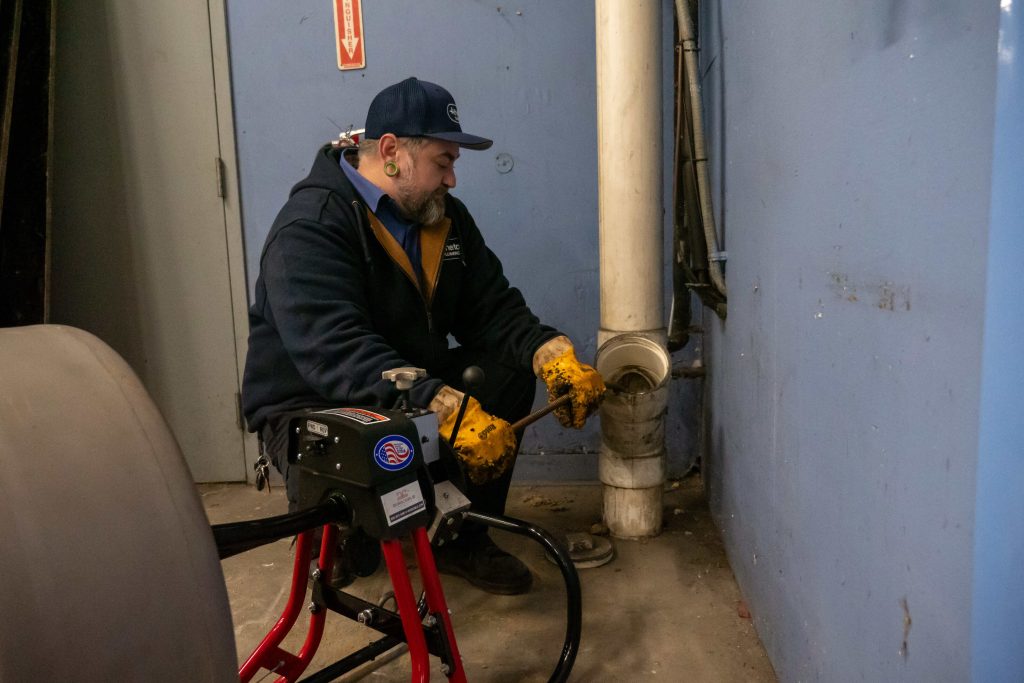
Motorized drain augers, another professional tool, can break through substantial blockages and remove debris that DIY methods cannot reach. When combined with video inspection technology, professional technicians can identify the exact location and nature of blockages, ensuring complete removal rather than temporary displacement.
The expertise that professional plumbers bring to drain cleaning extends beyond equipment access. Experienced technicians understand how different types of blockages respond to various cleaning methods and can adjust their approach based on your specific pipe materials, age, and condition. This knowledge prevents damage that can occur when inappropriate cleaning methods are applied to vulnerable plumbing systems.
Establishing an Effective Drain Maintenance Schedule for Dayton Homes
Creating an appropriate drain cleaning schedule for your Dayton home requires balancing several factors unique to our local environment and your household’s specific characteristics. While national plumbing guidelines typically recommend annual professional drain cleaning, Dayton’s hard water conditions often necessitate more frequent attention to maintain optimal performance.
For most Dayton households, professional drain cleaning every six to twelve months provides the best balance of preventive maintenance and cost-effectiveness. Homes with larger families, older plumbing systems, or heavy water usage may benefit from cleaning every six months, while smaller households with newer plumbing might extend the interval to annually.
Several indicators suggest your home may need more frequent professional attention. If you regularly experience slow drainage, recurring clogs, or notice mineral stains appearing quickly after cleaning, these signs indicate accelerated buildup that requires more aggressive maintenance. Homes with mature trees nearby face additional challenges from root intrusion, which can compound drainage problems and necessitate more frequent professional intervention.
The seasonal timing of drain cleaning can also impact its effectiveness. Many Dayton plumbers recommend scheduling major drain cleaning during spring or fall when moderate temperatures make the work more comfortable and when you’re likely to be home to address any issues that arise. Avoiding winter cleaning can prevent complications if unexpected problems require extensive repairs during cold weather.
Between professional cleanings, implementing a monthly maintenance routine can significantly extend the effectiveness of professional services. This routine should focus on preventing the accumulation of organic matter that can combine with mineral deposits to create stubborn blockages. Simple practices like running hot water after each use, avoiding grease disposal down drains, and using drain screens to catch hair and food particles can substantially reduce the rate of buildup.
For kitchen drains, particular attention should be paid to grease management, as the combination of cooking oils and Dayton’s hard water creates especially problematic deposits. Allowing grease to solidify and disposing of it in the trash, rather than washing it down the drain, prevents the formation of composite blockages that are particularly difficult to remove.
The Economic Impact of Preventive Drain Maintenance
Understanding the financial implications of regular drain maintenance versus reactive repairs helps Dayton homeowners make informed decisions about their plumbing care. The cost-benefit analysis of preventive maintenance becomes particularly compelling when considering the unique challenges posed by our local water conditions.
Emergency drain cleaning services typically cost two to three times more than scheduled maintenance visits, and that’s before considering the additional expenses associated with water damage, property disruption, and potential health hazards from sewage backups. When mineral-hardened blockages cause complete drain failures, the resulting problems can cascade throughout your plumbing system, requiring extensive repairs that far exceed the cost of regular maintenance.
The impact on appliance longevity represents another significant economic factor. Dishwashers, washing machines, and water heaters operating in hard water environments experience accelerated wear when drainage systems become compromised. Poor drainage forces these appliances to work harder, leading to premature failure and costly replacements. Regular drain maintenance helps ensure these expensive appliances operate efficiently throughout their intended lifespan.
Property value considerations also favor regular maintenance. Homes with well-maintained plumbing systems command higher resale values and experience fewer complications during property inspections. Conversely, properties with chronic drainage problems often face significant deductions in value and may encounter difficulties in sale transactions.
The indirect costs of poor drainage extend beyond immediate plumbing concerns. Slow drains and recurring clogs create ongoing inconvenience that affects daily routines and quality of life. The time spent dealing with drainage problems, purchasing cleaning products, and managing water damage represents a hidden cost that many homeowners underestimate.
Conclusion: Protecting Your Investment Through Professional Care
Regular drain cleaning represents one of the most cost-effective investments Dayton homeowners can make in their property’s long-term health and value. The unique challenges posed by our local water conditions make professional maintenance not just beneficial, but essential for preventing costly emergencies and ensuring optimal plumbing performance.
At Atherton Plumbing, our 67 years of experience serving the Greater Dayton community has taught us that proactive maintenance always proves more economical than reactive repairs. Our professional drain cleaning services are specifically designed to address the mineral buildup and composite blockages that characterize Dayton’s plumbing challenges, using advanced equipment and techniques that deliver lasting results.
Don’t wait for a plumbing emergency to discover the importance of regular drain maintenance. Contact Atherton Plumbing today at (937) 345-0939 to schedule your professional drain cleaning service and take the first step toward protecting your home’s plumbing investment. Our experienced team understands Dayton’s unique plumbing challenges and stands ready to provide the reliable, professional service that has made us the trusted choice for generations of local families.